Study Design

RYBREVANT FASPRO™ is approved across all RYBREVANT® indications as a rapid, ~5-minute subcutaneous injection(s)1*

PALOMA-3: A phase 3, randomized, open-label trial evaluated pharmacokinetics (PK) of RYBREVANT FASPRO™ vs RYBREVANT® (Q2W), both in combination with LAZCLUZE® (lazertinib)1,2

Serial brain MRIs were
required for all patients

KEY ELIGIBILITY CRITERIA

  • Locally advanced or metastatic NSCLC
  • Disease had progressed on or after osimertinib and platinum-based chemotherapy, irrespective of order
  • Documented EGFR ex19del or L858R
  • ECOG PS 0 or 1
1:1

RANDOMIZATION
(N=418)

RYBREVANT
FASPRO™
+ LAZCLUZE®
(n=206)

RYBREVANT®
+ LAZCLUZE®
(n=212)

Non-registrational data set

LAZCLUZE®
(n=216; blinded)

COPRIMARY ENDPOINTS

  • Ctrough (noninferiority)
  • C2 AUCD1-D15 (noninferiority)

SECONDARY ENDPOINTS

  • PFS
  • ORR
  • DOR
  • Safety

EXPLORATORY ENDPOINT

  • OS
Serial brain MRIs were
required for all patients

KEY ELIGIBILITY CRITERIA

  • Locally advanced or metastatic NSCLC
  • Disease had progressed on or after osimertinib and platinum-based chemotherapy, irrespective of order
  • Documented EGFR ex19del or L858R
  • ECOG PS 0 or 1
1:1

RANDOMIZATION
(N=418)

RYBREVANT
FASPRO™
+ LAZCLUZE®
(n=206)

RYBREVANT®
+ LAZCLUZE®
(n=212)

Non-registrational data set

LAZCLUZE®
(n=216; blinded)

COPRIMARY ENDPOINTS

  • Ctrough (noninferiority)
  • C2 AUCD1-D15 (noninferiority)

SECONDARY ENDPOINTS

  • PFS
  • ORR
  • DOR
  • Safety

EXPLORATORY ENDPOINT

  • OS

*Administration time only; actual clinic time may vary.1

RYBREVANT FASPRO™ effectiveness has been established based on studies of RYBREVANT®1

RYBREVANT FASPRO™ demonstrated a comparable PK profile to RYBREVANT®2

Coprimary endpoints
RYBREVANT FASPRO™ (N=206)
RYBREVANT® (N=212)
Geometric mean ratio (90% CI)
Ctrough (cycle 2, day 1) (%CV)
365 (33)
314 (32)
1.15 (1.04, 1.26)
Ctrough at steady state (cycle 4, day 1) (%CV)
224 (39)
162 (42)
1.43 (1.27, 1.61)
AUCD1-D15 in cycle 2 (%CV)
142,236 (31)
135,552 (24)
1.03 (0.98, 1.09)

AUC, area under the curve; C, cycle; Ctrough, trough concentration; CI, confidence interval; CV, coefficient of variation; D, day; DOR, duration of response; ECOG PS, Eastern Cooperative Oncology Group performance status; EGFR, epidermal growth factor receptor; ex19del, exon 19 deletion; NSCLC, non–small cell lung cancer; ORR, overall response rate; OS, overall survival; PFS, progression-free survival.


Safety
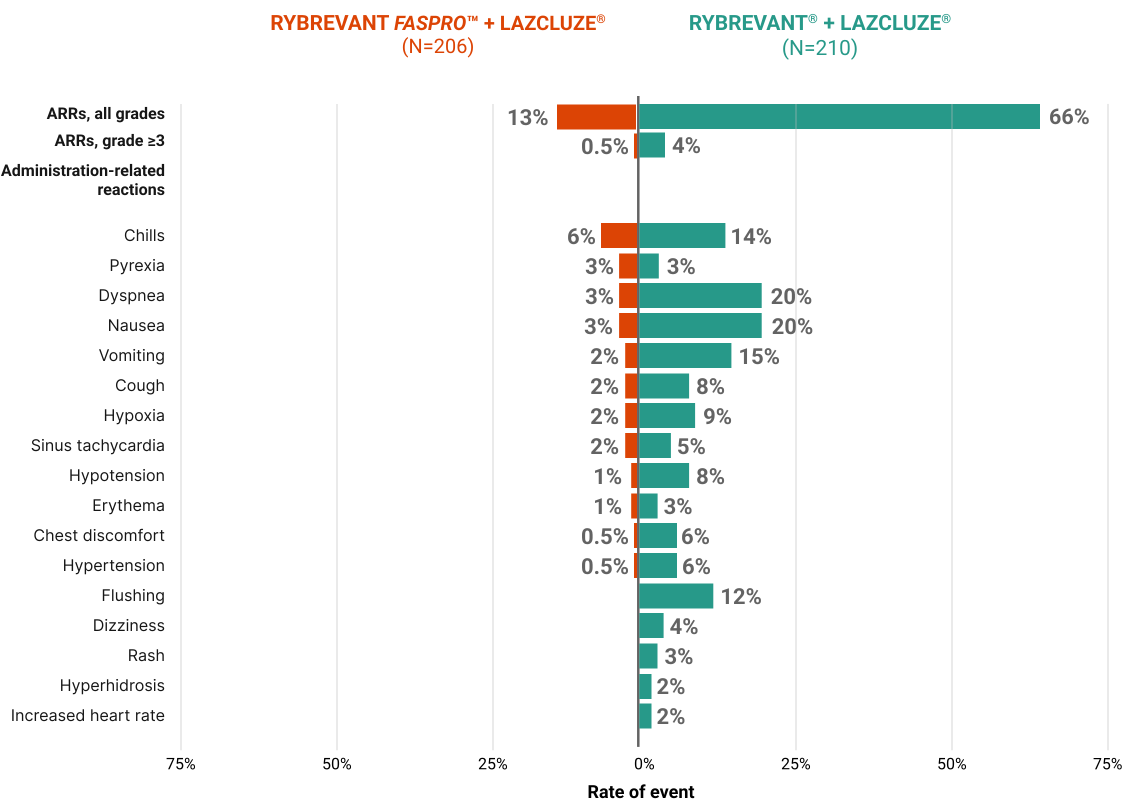
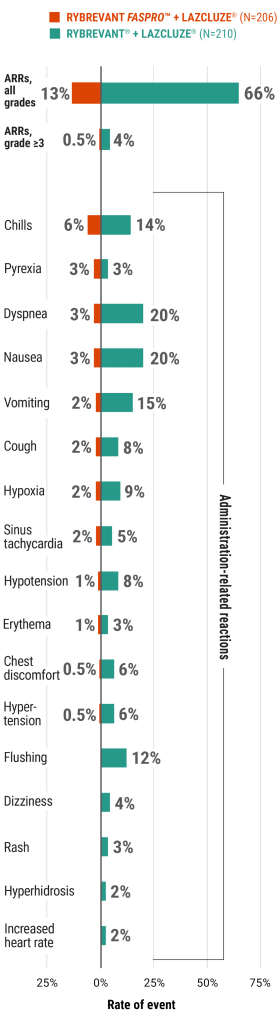
Safety profile of RYBREVANT FASPRO™ vs RYBREVANT® arm in the PALOMA-3 trial

Lower rates of administration-related reactions (ARRs) observed with RYBREVANT FASPRO™1*

80%reduction inARRs*
13%with RYBREVANT FASPRO™

vs

66%with RYBREVANT®

PALOMA-3 clinical study AAR detailsPALOMA-3 clinical study AAR details

Observation time: ARRs occurred in 13% of patients in PALOMA-3, 89% of which occurred on week 1, day 1. The median time to onset of ARR was ~2 hours. Monitor patients for any signs and symptoms of ARRs during injection in a setting where cardiopulmonary resuscitation medication and equipment are available. Patient monitoring time is up to healthcare provider discretion.

*In clinical trials of RYBREVANT® and the Prescribing Information for RYBREVANT®, the term “infusion-related reactions” was used instead of “administration-related reactions.”

Low rates of VTE observed with RYBREVANT FASPRO™ and prophylactic anticoagulant use2

When treated with RYBREVANT FASPRO™ + LAZCLUZE® and prophylactic anticoagulant use (n=164)

VTE RATE OF7%

was observed, representing a return to baseline risk for patients with advanced NSCLC2,3

80% (n=164) of patients in the RYBREVANT FASPRO™ + LAZCLUZE® arm of PALOMA-3 received prophylactic anticoagulation for the first 4 months of treatment. Among all patients receiving RYBREVANT FASPRO™ + LAZCLUZE® (N=206), VTE rate was 11%.1,2

Majority of ARs were grades 1 and 21

ARs (≥10%) in PALOMA-31

Adverse
reaction
RYBREVANT FASPRO™ + LAZCLUZE®
(N=206)
RYBREVANT® + LAZCLUZE®
(N=210)
All grades
(%)
Grades 3–4
(%)
All grades
(%)
Grades 3–4
(%)
Skin and subcutaneous tissue disorders
Rash*
80
17
78
13
Nail toxicity*
58
3.9
56
2.9
Dry skin*
18
0
18
0
Pruritus
17
0
12
0
Musculoskeletal and connective tissue disorders
Musculoskeletal pain*
50
2.4
35
3.8
General disorders and administration site conditions
Fatigue*
37
3.4
31
2.4
Edema*
34
2.9
34
1
Pyrexia
13
0
11
0
Local injection site reactions*
11
0
0
0
Gastrointestinal disorders
Stomatitis*
36
0.5
38
2.9
Nausea
30
0.5
25
1.4
Diarrhea
22
1.5
19
1
Vomiting
22
1
20
0.5
Constipation
22
0
20
0.5
Metabolism and nutrition disorders
Decreased appetite
22
0.5
25
1.4
Nervous system disorders
Headache*
21
0.5
19
0.5
Peripheral neuropathy*
19
1.5
23
1.4
Dizziness
12
0
12
0
Injury, poisoning, and procedural complications
Administration-related reactions
13
0.5
66
3.8
Eye disorders
Ocular toxicity*
13
0.5
11
0.5
Vascular disorders
Venous thromboembolism*
11
1.5
18
5

*Grouped terms.

  • Serious ARs occurred in 33% of patients who received RYBREVANT FASPRO™ + LAZCLUZE®1
  • Serious ARs in ≥2% of patients who received RYBREVANT FASPRO™ + LAZCLUZE® included ILD/pneumonitis (6%), pneumonia (2.4%), VTE (2.4%), and fatigue (2.4%)1
  • Death due to ARs occurred in 5% of patients treated with RYBREVANT FASPRO™, including ILD/pneumonitis (1.9%), pneumonia (1.5%), respiratory failure (1%), and sudden death (1%)1
  • The most common ARs (≥20%) were rash, nail toxicity, musculoskeletal pain, fatigue, stomatitis, edema, nausea, diarrhea, vomiting, constipation, decreased appetite, and headache1
  • Clinically relevant ARs in <10% of patients who received RYBREVANT FASPRO™ + LAZCLUZE® were abdominal pain, hemorrhoids, ILD/pneumonitis, and skin ulcer1

Select laboratory abnormalities (≥20%) that worsened from baseline in PALOMA-31*

Laboratory abnormality
RYBREVANT FASPRO™ + LAZCLUZE®
(N=206)
RYBREVANT® + LAZCLUZE®
(N=210)
All grades
(%)
Grades 3–4
(%)
All grades
(%)
Grades 3–4
(%)
Chemistry
Decreased albumin
92
4.9
91
5
Increased alkaline phosphatase
47
1.5
37
0
Increased alanine aminotransferase
45
3.4
50
5
Decreased sodium
36
5
43
8
Increased aspartate aminotransferase
36
2
40
2.4
Decreased calcium (corrected)
33
0
36
0
Decreased magnesium
27
0
30
1.4
Increased gamma-glutamyl transferase
26
2
27
1.9
Decreased potassium
22
5
25
4.3
Hematology
Decreased lymphocyte count
57
6
60
29
Decreased platelet count
37
2.4
42
1.9
Decreased white blood cell
36
0.5
31
0.5
Decreased hemoglobin
34
2
36
2.4

*The denominator used to calculate the rate is the number of patients with a baseline value and at least one post-treatment value for the specific lab test.

Prophylaxis may help reduce the risk of key ARs

Learn more

Adaptable dosing is available to help your patients manage ARs and stay on treatment4*

Discontinuation rates and dose modifications

  • Permanent discontinuation of RYBREVANT FASPRO™ due to an AR occurred in 13% of patients1
  • Dosage interruptions of RYBREVANT FASPRO™ due to an AR occurred in 54% of patients1
  • Dose reductions of RYBREVANT FASPRO™ due to an AR occurred in 20% of patients1

Learn more about available adaptable dosing

Learn more

*Certain types and severity of ARs require discontinuation after first occurrence.1

AR, adverse reaction; ILD, interstitial lung disease; VTE, venous thromboembolism.

References:

  1. RYBREVANT FASPRO™ [Prescribing Information]. Horsham, PA: Janssen Biotech, Inc.
  2. Leighl NB, Akamatsu H, Lim SM, et al. Subcutaneous versus intravenous amivantamab, both in combination with lazertinib, in refractory epidermal growth factor receptor–mutated non–small cell lung cancer: primary results from the phase III PALOMA-3 study. J Clin Oncol. 2024;42(30):3593-3605. doi:10.1200/JCO.24.01001
  3. Yang R, Wang H, Liu D, Li W. Incidence and risk factors of VTE in lung cancer: a meta-analysis. Ann Med. 2024;56(1):1-14. doi:10.1080/07853890.2024.2390200
  4. Data on file. Janssen Biotech, Inc.